How to Track LLM Prompts and Measure AI Search Visibility for Your Business
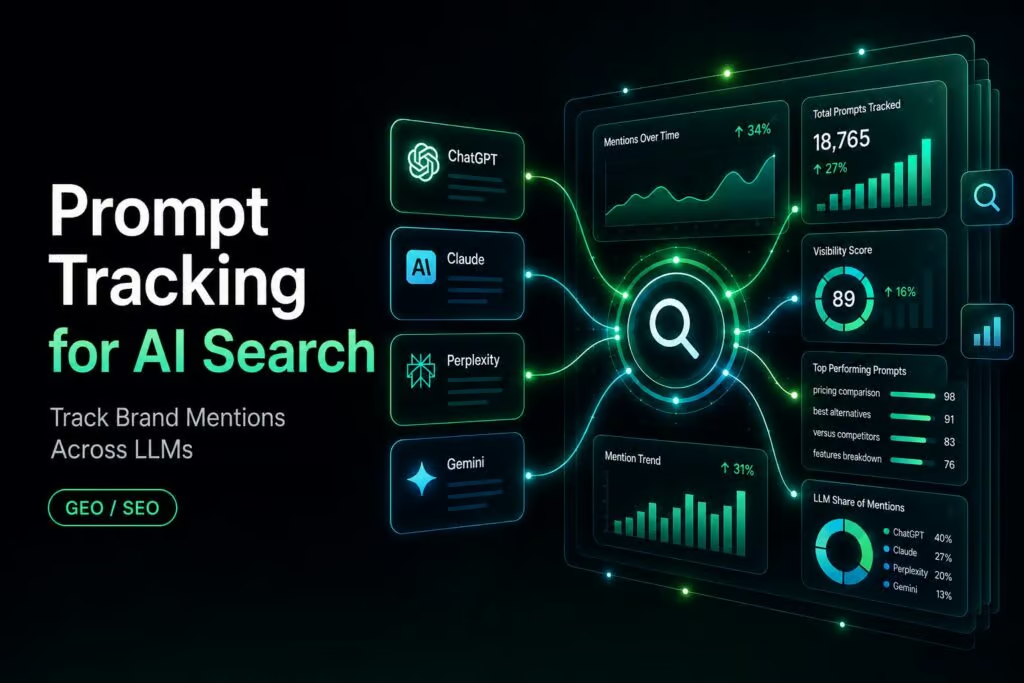
LLM prompt tracking measures whether large language models (LLMs) such as ChatGPT, Perplexity, and Google AI actually cite your business when buyers ask for recommendations in your category. The practice answers a new question on top of the old SEO question, instead of replacing it: even a site that ranks well in traditional search can stay invisible inside the answers an AI assistant hands back, and prompt tracking is what reveals that gap before your competitors fill it.
What LLM prompt tracking actually measures
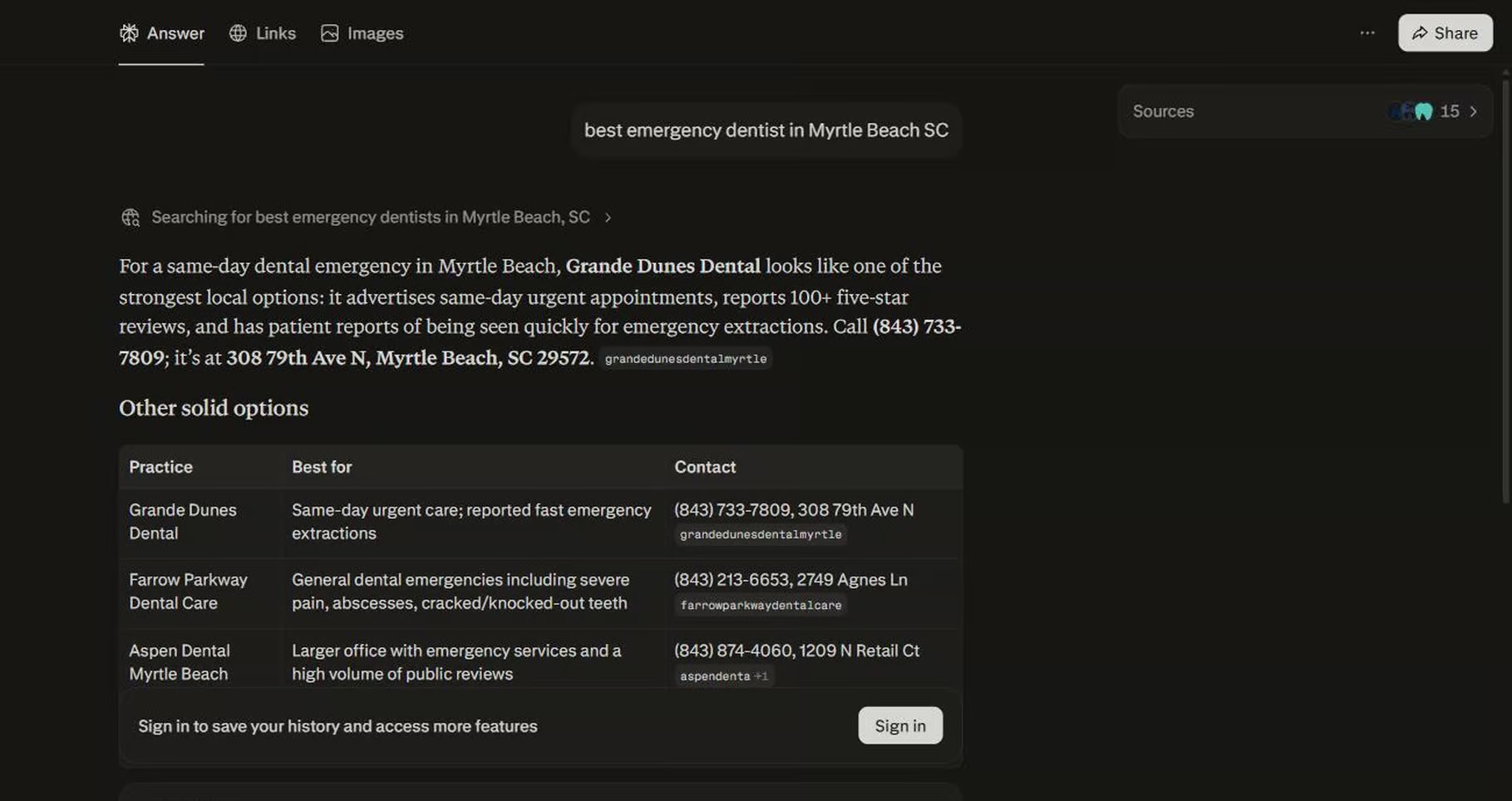
Traditional rank tracking watches where a blue link lands on a search engine results page. Prompt tracking watches whether your brand name appears inside a generated answer, and how often, and in what position relative to the alternatives an AI cites for the same buyer question.
That distinction matters because buyers searching for a local service have already shifted a large share of their queries away from a search box. ChatGPT reports more than 300 million weekly users, and when those users ask for the best plumber, the best family lawyer, or the best water testing lab in their zip code, the assistant returns a short list with reasons. A business that never appears on that list has effectively opted out of a fast growing channel, even if its Google Business Profile is perfect and its website still ranks.
The signals an AI assistant leans on look different from the ones a search engine ranks for. The model wants a clean entity (who you are, what you do, where you serve), consistent listings across the directories it trusts, structured data it can parse (schema markup the page exposes so a machine knows what each block means), and on-page content that answers the buyer question the prompt actually contained.
Why brand mentions inside AI answers matter more than rankings alone
An LLM citation carries a weight a position ten blue link does not. The user sees a short, confident list, often one or two names, with the assistant’s reasoning written beside each one. The click that follows is warmer and the consideration is further along, because the model has already filtered and recommended.
That is also why competitors who never outrank you on Google can still beat you inside an AI answer. A peer firm that has clean structured data, an accurate directory footprint, and content written in question and answer form gets passed to the model as a trustworthy entity. A firm with the same service and better backlinks but messier signals gets passed over. The difference shows up in the prompt tracker long before it shows up anywhere else.
For local businesses, the stakes are concrete. Two new customers of a private investigations firm told the firm they hired them because an AI assistant named the firm first when asked for the best private investigator in their area. The buyers read the citation, opened the website, checked the reviews, and signed. Stories like this are appearing across trades, legal, healthcare, and home services as prompt tracking confirms what used to be rumor.
Prompts worth tracking in your category
The prompts that matter are the ones a real buyer types, not the abstract ones an SEO tool generates. A practical prompt list comes out of three sources:
- Service plus city: best family lawyer in Austin, emergency plumber near Denver, water testing lab in Tampa.
- Problem plus location: who can test for lead in my water in Phoenix, divorce attorney for high net worth cases in Miami.
- Comparison and trust: top rated personal injury firm near me, most trusted water testing service in my area.
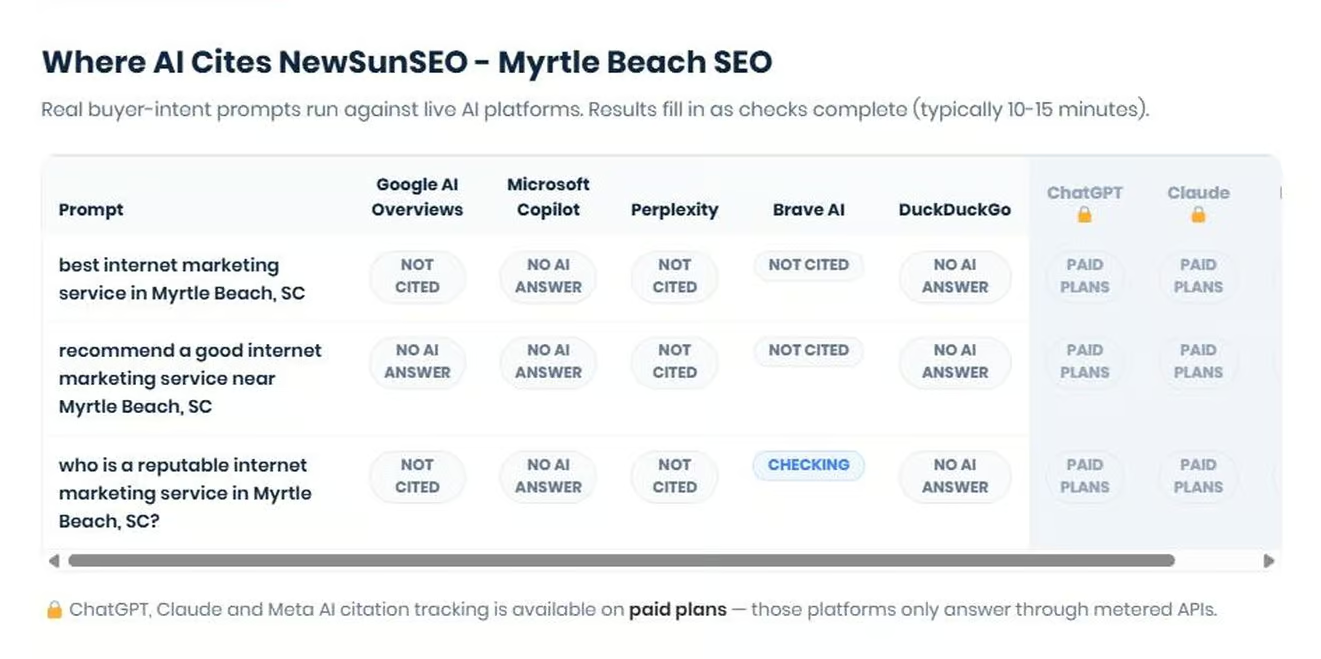
Run each prompt through the assistants your buyers actually use: ChatGPT, Perplexity, Google AI Overviews, Microsoft Copilot, Brave AI, and DuckDuckGo. Record whether your brand is cited, whether a competitor is cited instead, and whether the answer returns local results at all. Repeating this weekly turns prompt tracking into a trend line rather than a single snapshot.
What a prompt tracking audit looks for on your site
A complete prompt tracking audit pairs the prompt results with a scan of your own digital footprint, because an AI cannot cite a business it cannot read. The scan grades your site across four areas:
- AI Discovery: which LLM crawlers can reach your pages, and which you accidentally blocked when you meant only to block training scrapers. OpenAI alone runs three: GPTBot for training data, OAI-SearchBot for the live search index, and ChatGPT-User for real time citation fetches. A blanket block that was meant to stop the first one turns away the other two as well, and your business disappears from answers about your own industry.
- AI Trust Signals: how complete and consistent your business information is across your own site, your directory listings, and the schema markup an assistant can parse.
- Structured Data: whether your key pages carry the schema an LLM needs to recognize a LocalBusiness, a Service, a Product, an FAQPage, or a Review.
- Content Readiness: whether your pages answer buyer questions in clear question and answer form, with the depth and specificity the model looks for when it chooses between you and a competitor.
Audit tools now run real buyer intent prompts against Google AI Overviews, Microsoft Copilot, Perplexity, Brave AI, and DuckDuckGo and report cited versus not cited per platform, with ChatGPT, Claude, and Meta AI tracking on paid plans. The free BizScoreAI scan grades a site across AI search, SEO, local SEO, and directory accuracy across 17 checks marked pass, warning, or fail in under a minute and serves as a starting baseline. The paid BizScoreAI audit and fix list ranks the improvements so the biggest wins come first. The partnered SEOScanPro AI Visibility check breaks the score into AI Discovery, AI Trust Signals, Structured Data, and Content Readiness, naming the measured value behind every check so a developer can work from the report directly.
From prompt results to a fix list
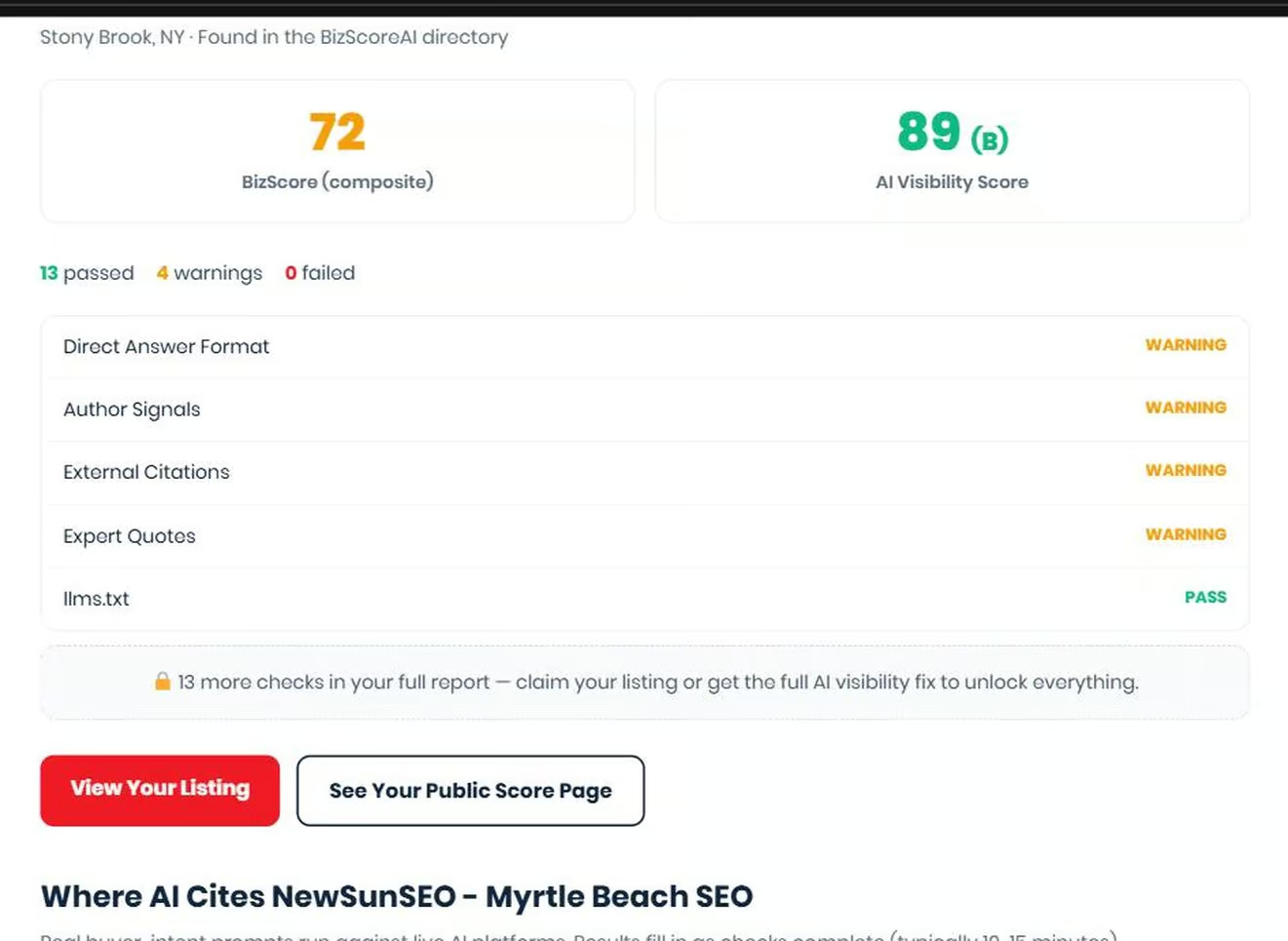
Raw prompt results are a shopping list, not a strategy. A working fix list orders the fixes the way a business owner would act on them.
- Crawler access first. Confirm GPTBot, OAI-SearchBot, ChatGPT-User, ClaudeBot, PerplexityBot, and Google-Extended are each handled correctly in robots.txt. The same audit can verify whether llms.txt is present and worth keeping, since Claude and Perplexity confirm they read it while Google says it ignores the file entirely.
- Schema second. Add or repair the structured data on your home page, service pages, location pages, contact page, and FAQ. Audit reports flag which templates carry schema today, which are malformed, and which are missing entirely.
- Listings third. Reconcile your name, address, phone, hours, services, and description across every directory an LLM leans on. Inconsistent listings are a quiet, common reason a model picks a competitor over you.
- Question and answer content fourth. Rewrite the pages buyers land on in clear Q and A form, written at the depth the prompt asked for, with your service area and offer stated plainly.
- Track weekly. Re-run the same prompts in the same assistants on the same day of the week. A trend line beats a single data point for separating a real change from noise.
Pairing the prompt tracker with a full technical audit shortens the loop further. The full SEOScanPro site audit covers 85+ checks across 17 categories, with the measured value behind every check, so Core Web Vitals, security headers, structured data, and AI access all sit on one report card. Local businesses add the GEO Grids local and map visibility tool, which measures position from dozens of points across a service area and plots the results on a map. Pin movement on a grid often mirrors what the prompt tracker measures inside the assistants.
How to read trend data without fooling yourself
Prompt tracking rewards consistency more than cleverness. Pick a prompt set, run it on a fixed schedule, and change the prompts only when buyer language changes. A snapshot in week one is a starting point, not a verdict.
Watch for two patterns. A sudden drop across many prompts at once usually means a technical change, not a content problem: a plugin update added a Disallow line, a deploy flipped a header, or a schema block got dropped. A gradual climb across a few prompts means a fix landed, and the same trend should show up in GEO grid positions and in organic ranks for the same query terms. Tracking the prompt results alongside rank tracker data and analytics visitors confirms a causal chain rather than coincidence.
What changes when prompt tracking becomes routine
Businesses that run prompt tracking weekly stop arguing about AI hype and start managing a concrete channel. They know which prompts mention them, which prompts name a competitor instead, which citations carry weight, and which fixes on their own site would move which assistant. Visibility inside AI answers becomes a number with a trajectory, a fix list ranked by impact, and a weekly confirmation that the work landed.
The baseline is fast and free. A business owner can run a BizScoreAI scan today, see the AI visibility, SEO, local SEO, and directory accuracy score in under a minute, and decide which paid audit and fix list to commission. From there, prompt tracking is what keeps the score honest.
FAQ
What is LLM prompt tracking?
LLM prompt tracking measures whether AI assistants such as ChatGPT, Perplexity, and Google AI Overviews cite your business when a buyer asks for a recommendation in your category. It records which prompts mention you, which mention a competitor, and how the citations change week to week.
Why does AI search visibility matter for local businesses?
Buyers searching for local services now ask ChatGPT, Google AI, Siri, and Perplexity instead of typing into a search engine. ChatGPT alone reports more than 300 million weekly users. A business that does not appear in the short list an AI returns loses that buyer to a competitor who does, even when the competitor ranks lower on Google.
How often should a business run a prompt tracking audit?
Run the same prompt set on a fixed weekly schedule in the same assistants. A weekly cadence turns prompt tracking into a trend line, separates technical incidents from content changes, and pairs cleanly with technical site audit scores and local grid position data.
Related coverage
- AI Visibility: How to Get Your Brand Cited by ChatGPT, Perplexity, and Google AI Overviews
- How To Use Search Console To Find The Local Searches Your Map Listing Never Shows You
This article summarizes reporting from bizscoreai.com, bizscoreai.com, seoscanpro.ai, seoscanpro.ai, seoscanpro.ai.