Google Issuing More Manual Action Penalties, SEOs Report

Businesses can now spot and reverse a Google manual action penalty sooner, as a clear rise in cases over recent weeks gives site owners an early signal to audit their content, links, and structured data before organic traffic takes a deeper hit. The increase, reported by multiple SEO consultants, suggests Google is leaning harder on human review for spam policy violations at the same time its automated systems continue to flag patterns of abuse.
What is changing in manual action activity
Manual actions are penalties applied by Google’s review team after a site is flagged through automated spam detection, user-submitted spam reports, or routine quality sweeps. They show up in Google Search Console and can suppress a page or an entire site from search results.
Consultants who specialize in penalty recovery say requests for help have climbed noticeably in recent weeks. One consultant who has worked on manual action cases for two decades reported moving from essentially no requests to several per week, a sharp change even if it remains well below the volume seen during the pre-Penguin era of frequent manual penalties. A second consultant echoed the observation, noting that manual actions have been appearing across a wider set of sites in recent months, driven in part by the spread of scaled content abuse and short-cut SEO tactics tied to AI-generated content.
Which manual actions are showing up most often
The most common categories seen in recent cases include thin content with little or no added value, pure spam, and scaled content abuse. Most affected sites are described as legitimate, long-standing businesses that had relied on aggressive content production rather than fly-by-night spam operations.
Manual actions that site owners may encounter include:
- Back button hijacking: the site interferes with browser history so visitors cannot use the Back button as expected.
- Site abused with third-party spam: a significant portion of the site is used to publish spam, often through forums, uploads, or free hosting.
- User-generated spam: visitors have posted spam in forums, comments, or user profiles.
- Spammy free host: a large share of pages on a free hosting service are spammy.
- Structured data issue: markup violates Google’s structured data guidelines, for example by describing hidden, irrelevant, or misleading content.
- Unnatural links to your site: Google has found a pattern of artificial or manipulative inbound links.
- Unnatural links from your site: Google has found a pattern of artificial or manipulative outbound links.
- Thin content with little or no added value: pages offer little unique value, such as thin affiliate pages, scraped content, or doorway pages.
- Cloaking and/or sneaky redirects: Google is shown different content from visitors, or visitors are redirected somewhere unexpected.
- Major spam problems: the site uses aggressive spam tactics or has repeated or egregious policy violations.
- Cloaked images: images shown to Google differ from or are obscured compared with what visitors see.
- Hidden text and/or keyword stuffing: pages hide text from visitors or repeat keywords excessively.
- AMP content mismatch: AMP content differs materially from its canonical page.
- Sneaky mobile redirects: mobile visitors are secretly redirected to content Google’s crawlers do not see.
- Site reputation policy: third-party content on the site is inconsistent with Google’s site reputation policy.
Why manual actions are a serious business risk
A manual action can remove a page or an entire domain from Google search results. Recovery often requires a deep content cleanup, a full link audit, and a successful reconsideration request. Sites that fail to address root causes can see 90% or more of their organic traffic disappear overnight, and a rejected reconsideration can extend the penalty indefinitely.
Forum activity in the Google Webmaster Help community shows the pattern: repeated threads about thin content manual actions on blog sections, scaled content abuse penalties on legal and news sites, transparency manual actions with no outcomes after multiple reconsideration requests, and rejected pure spam cases despite cleanup of thousands of URLs. The common thread is the use of scaled or AI-assisted content that did not meet Google’s quality thresholds.
What site owners should check right now
The first step is to open Google Search Console and check the Manual Actions report for any active notices. From there, a useful audit checklist includes:
- Review pages flagged for thin content and either expand them with original material or remove them.
- Audit inbound and outbound links for patterns that look artificial, then submit a disavow file where appropriate.
- Validate structured data against Google’s guidelines to remove hidden, irrelevant, or misleading markup.
- Check forums, comment systems, and user profiles for injected spam and tighten moderation.
- Compare mobile and desktop content to confirm there are no sneaky mobile redirects.
- Document every cleanup step before submitting a reconsideration request, since each request is reviewed closely.
Routine technical audits make it easier to catch issues before a human reviewer does, and a structured audit tool can surface the underlying signals behind every check. SEOScanPro runs a full technical audit and shows the measured result behind each item on the list, including on-page and local SEO signals that often overlap with spam policy issues.
How to read the available evidence
The reported uptick is based on consultant caseloads and forum thread volume, both of which are useful signals but not official Google data. When asked to compare recent Google Webmaster Help forum activity, two AI tools each produced charts showing more manual action threads than in the prior period, though the two visualizations disagreed on the exact shape of the rise. The takeaway is a directional increase, not a precise percentage, and site owners should treat it as a prompt to review their own risk surface rather than as a confirmed policy shift.
FAQ
What is a Google manual action penalty?
A Google manual action penalty is a penalty applied by Google’s review team after a site is flagged through automated spam detection, user-submitted spam reports, or routine quality sweeps. It appears in Google Search Console and can suppress a page or an entire site from search results.
Are Google manual actions increasing right now?
Yes. Multiple SEO consultants report a rise in manual action cases over recent weeks, with thin content, pure spam, and scaled content abuse the most common categories. The volume is described as higher than recent months but still well below the pre-Penguin era.
How do you recover from a Google manual action?
Recovery starts with identifying the violation in Google Search Console, cleaning up the affected pages, links, or structured data, and submitting a reconsideration request that documents every change. Sites that fail to address the root cause often face repeated rejections and extended penalties.
Related coverage
- Google Search Console Links Report Not Updated In A Month – LocalSEOBot
- Google Search Console Indexing Report Missing June 2026 Data – LocalSEOBot
SEOScanPro
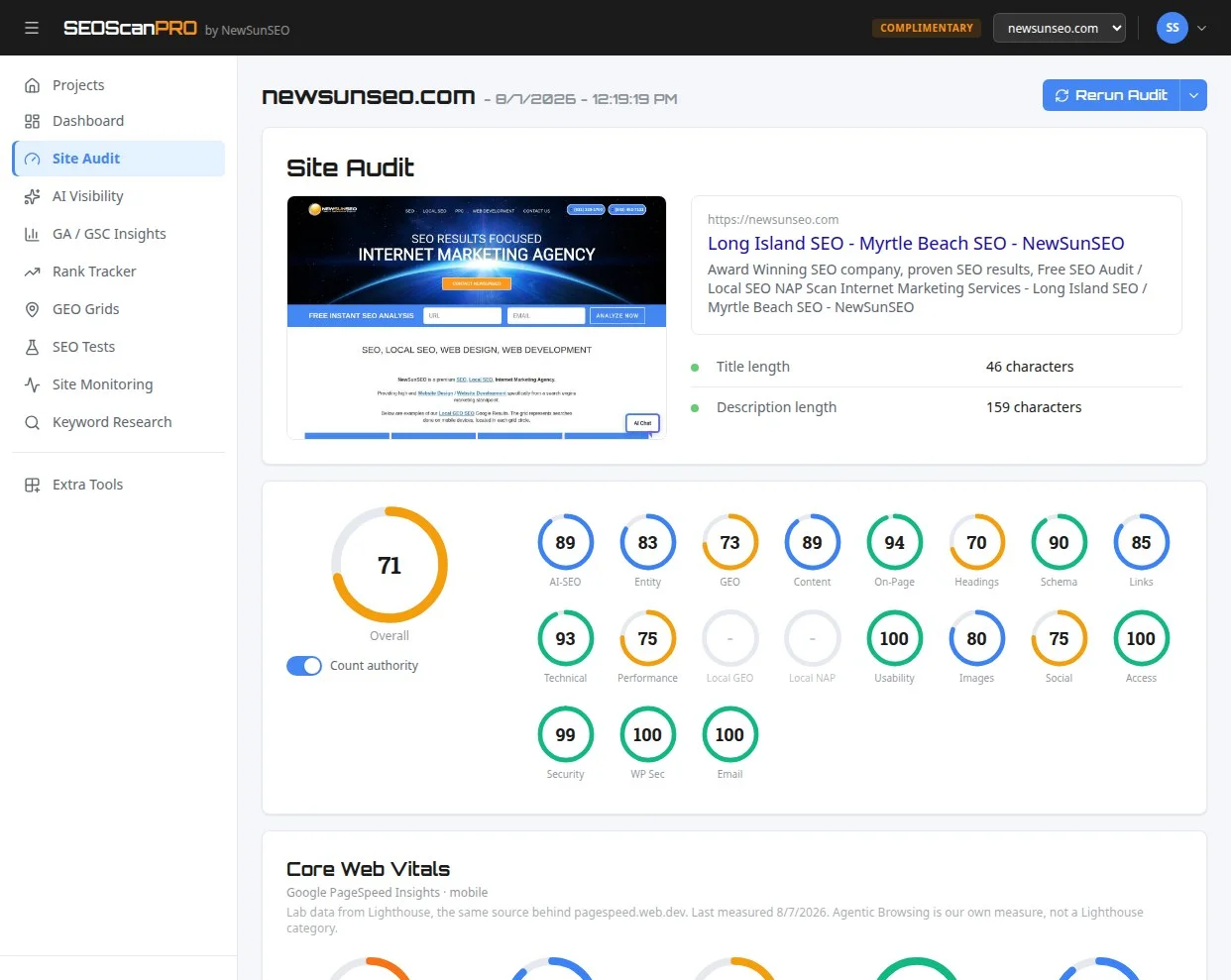
SEOScanPro’s site audit tool runs a full technical audit of a site and shows the measured result behind every check. Open the site audit tool.
This article summarizes reporting from seroundtable.com.