Bing Webmaster Tools Adds AI Performance Dashboard in Public Preview
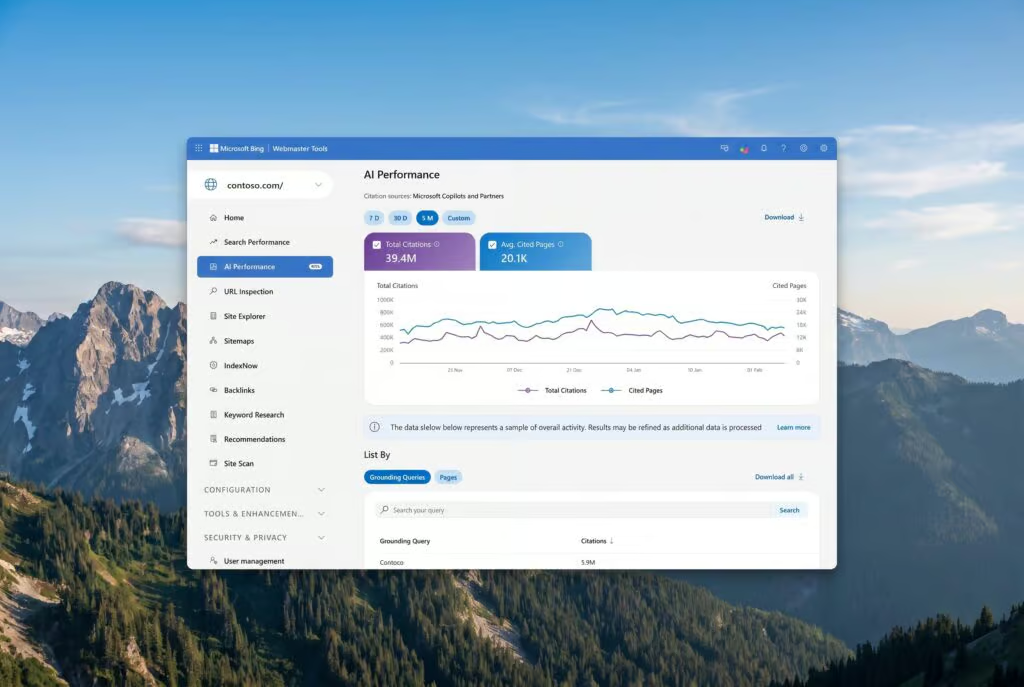
Microsoft has launched AI Performance in Bing Webmaster Tools in public preview as of February 2026, giving publishers insight into how their URLs are cited across Microsoft Copilot, AI-generated summaries in Bing, and select partner integrations.
The feature extends the existing Search Insights experience, which has historically focused on indexing, crawl health, and search performance. AI Performance adds visibility into citations inside generative answers, including which URLs are referenced and how citation activity changes over time.
What does the AI Performance dashboard measure?
- Total Citations: The total number of citations displayed as sources in AI-generated answers during the selected time frame. The metric reflects how often content is referenced, not placement within a specific answer.
- Average Cited Pages: The average number of unique pages from a site displayed as sources per day over the selected range. Numbers are aggregated across supported AI surfaces and are not an indicator of ranking or authority.
- Grounding Queries: The key phrases the AI used when retrieving content that was referenced. The data reflects a sample of overall citation activity and will continue to be refined.
- Page-level Citation Activity: Citation counts for individual URLs, making it easy to see which pages are referenced most often. The metric tracks citation frequency, not page importance or placement.
- Visibility Trends Over Time: A timeline showing how citation activity changes across supported AI experiences.
Microsoft framed the release as an early step toward Generative Engine Optimization (GEO) tooling inside Bing Webmaster Tools, giving publishers a way to understand how their content participates in AI-driven experiences.
How should publishers use these insights?
The data is intended to be actionable. By reviewing cited pages and grounding query phrases, publishers can validate which pages are already being used as references in AI answers, identify content that appears frequently across AI answers, and spot opportunities to improve clarity, structure, or completeness on pages that are indexed but less frequently cited.
How can these signals improve content?
Once a publisher understands which pages and topics are being cited, the signals can guide content improvements in several ways.
- Strengthen depth and expertise. Pages cited for specific grounding query phrases often reflect a clear subject focus and domain expertise. Expanding coverage in related areas can reinforce authority.
- Improve structure and clarity. Clear headings, tables, and FAQ sections help surface key information and make content easier for AI systems to reference accurately.
- Support claims with evidence. Examples, data, and cited sources help build trust when content is reused in AI-generated answers.
- Keep content fresh and accurate. Regular updates help ensure AI systems reference the most current version of a page.
- Reduce ambiguity across formats. Aligning text, images, and video so they consistently represent the same entities, products, or concepts reduces the chance of misinterpretation.
For deeper guidance on structuring content for AI answers, Microsoft points publishers to its existing resource on Optimizing Your Content for Inclusion in AI Search Answers.
How does IndexNow help keep content current?
The post also highlighted IndexNow as a complementary mechanism for keeping content current. IndexNow notifies participating search engines whenever content is added, updated, or removed, which helps AI systems reference the most current version of a page when generating answers. Publishers who have not yet adopted IndexNow can get started at the project’s website.
What should local businesses know?
For local businesses, accurate business information is particularly important when AI experiences surface answers to location-based queries. In addition to Bing Webmaster Tools, Microsoft recommends registering with Bing Places for Business to keep details such as address, hours, and contact information current and eligible for inclusion in AI-generated responses.
Bing respects all content owner preferences expressed through robots.txt and other supported control mechanisms, so any opt-outs already in place continue to apply.
What’s next for AI Performance?
Microsoft described AI Performance as a step toward greater transparency between AI systems and the open web. The team plans to continue working with publishers and the webmaster community to improve inclusion, attribution, and visibility across both search results and AI experiences as the capabilities evolve.
AI Performance in Bing Webmaster Tools is available now in public preview.
FAQ
What is the AI Performance dashboard in Bing Webmaster Tools?
AI Performance is a new set of insights in Bing Webmaster Tools that entered public preview in February 2026. It shows publishers how their content appears as citations across Microsoft Copilot, AI-generated summaries in Bing, and select partner integrations.
Which metrics does the AI Performance dashboard include?
The dashboard includes Total Citations, Average Cited Pages, Grounding Queries, Page-level Citation Activity, and Visibility Trends Over Time. These metrics track citation frequency across supported AI surfaces and are not indicators of ranking or authority.
What did Microsoft recommend alongside the AI Performance dashboard?
Microsoft pointed publishers to its resource on Optimizing Your Content for Inclusion in AI Search Answers, highlighted IndexNow for keeping content current, and recommended Bing Places for Business for local companies that want their address, hours, and contact details eligible for inclusion in AI-generated responses.