Three-Quarters of Americans Oppose Data Centers Near Them, New Poll Finds
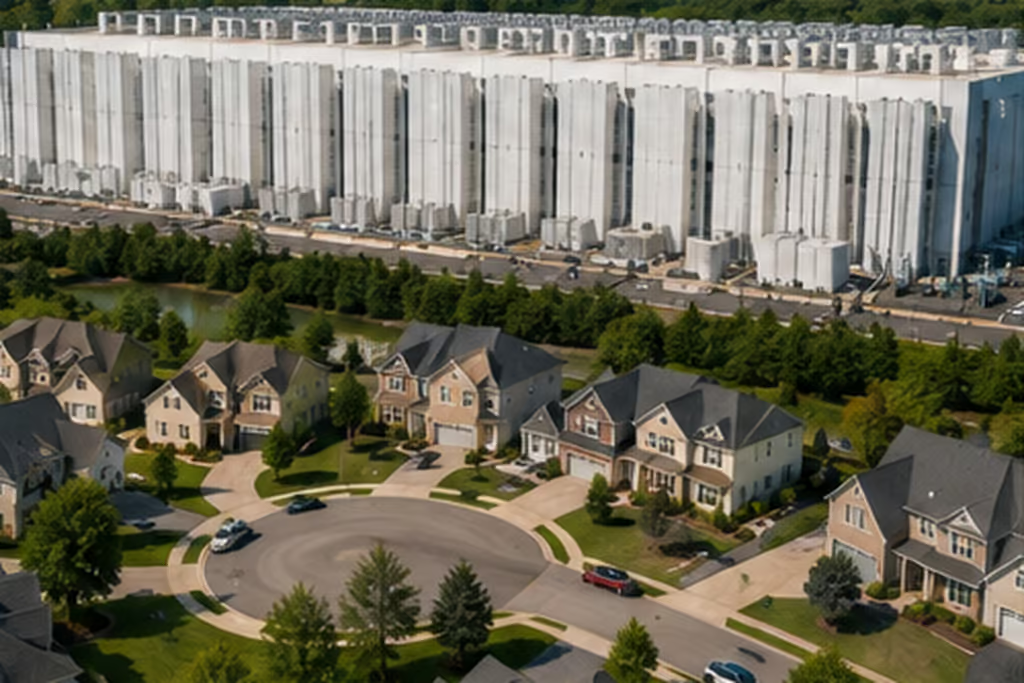
A Heatmap News poll of 2,045 registered American voters, fielded August 8 to 13, found that 75% of respondents do not want a data center built near them and 64% would strongly oppose such a development. Only 15% of respondents favored a nearby data center, with just 4% strongly in favor. The survey’s 33-point swing against the facilities over the past year cuts across age, gender, income, partisan affiliation, and the rural-urban divide.
What the poll measured
Embold Research conducted the survey via text-to-web among 2,045 registered voters. The top-line numbers: 75% oppose or strongly oppose a data center near them, 64% would strongly oppose such a development, 15% favor one, and only 4% strongly favor one. The poll also breaks down net favorability by party: data centers are 43 points underwater with Republicans, 65 points underwater with independents, and 75 points underwater with Democrats.
How the opposition has shifted in 12 months
This is the fourth time Heatmap has run a survey on data center attitudes in the past year, and the share of Americans opposed keeps climbing. In the August 2024 wave, 43% of respondents were at least OK with a nearby data center while 42% were not. By February, opposition rose to 51%. In May, it reached 60%, with 54% strongly opposed. The latest August reading puts opposition at 75%, a 33-point swing against the facilities in 12 months without any change to the question wording.
Other surveys point in the same direction
The Heatmap numbers track with other recent polling. A July survey from the real-estate firm Redfin found that 53% of Americans did not want a data center built near them, while 34% would support one. Both surveys point to a broad, consistent decline in local acceptance of the facilities that house the servers behind cloud computing and AI services.
Why the backlash has accelerated
The poll’s writeup does not break out which concerns drove the shift, but several longstanding criticisms of data centers have intensified alongside the AI boom:
- Rising electricity and water use at increasingly large complexes.
- Noise generated by the facilities and their cooling systems.
- On-site gas turbines at many sites and the local air pollution they produce.
- Relatively few permanent jobs after construction wraps up.
- Visual and landscape impacts on rural and suburban areas, including transmission infrastructure.
- Frustration with AI outputs themselves, including hallucinations and low-quality web content, which data centers help produce.
- Rising power bills paid by households far from any data center.
- Higher prices for consumer electronics such as phones, tablets, and computers, driven in part by AI-related demand.
- Concern about speculative data center financing and its potential effect on the broader economy.
Where the sentiment shows up in public life
Data center opposition has begun surfacing in marketing, activism, and policy debates. A recent commercial from the beverage brands Liquid Death and Garage Beer features former NFL player Jason Kelce urging viewers to drink those products to create pee for cooling data centers, a tongue-in-cheek riff on the facilities’ water use. Across the country, residents have organized protests over new and proposed data center builds, tying local noise, water, and power concerns to broader worries about AI’s growth.
FAQ
What did the latest data center poll find?
A poll of 2,045 registered voters conducted August 8 to 13 found that 75% of Americans do not want a data center built near them, 64% would strongly oppose one, 15% favor one, and only 4% strongly favor one.
How quickly has opposition to data centers grown?
Heatmap’s four polls over the past year show opposition rising from 42% in August 2024 to 51% in February, 60% in May, and 75% in August, a 33-point swing against the facilities with no change to the question wording.
Do other surveys agree that Americans oppose data centers?
Yes. A July Redfin survey found that 53% of Americans did not want a data center built near them, while 34% would support one, matching the broader downward trend in local acceptance.
This article summarizes reporting from pcmag.com.