Why Private AI Chat Pages Are Showing Up in Google and What Site Owners Should Learn

Site owners who share AI chat links can end up with those conversations indexed in Google when the underlying application does not block search engine crawlers. The fix is in the publishing controls, not in the AI model, and any business that publishes shared chat pages should know exactly which setting protects them.
The pattern has surfaced around shared conversation links from Anthropic’s Claude, where users have reported finding their shared chats appearing as search results. The underlying cause is a server configuration gap on the publishing side, not a model problem, and the same gap can affect any tool that offers a share-by-link option.
What is actually happening to these pages?
A shared AI chat link is a normal URL, served with a normal HTTP response. Whether Google indexes it depends entirely on how the publishing application treats that URL: whether it returns a noindex header, blocks crawlers in robots.txt, or requires some kind of gate before the content is served.
If the application serves the chat page publicly without telling crawlers to stay out, Google can treat it like any other page on the open web and include it in its index. The chat content itself is not hidden by the AI; the URL is reachable, and the page is readable to a crawler.
That is why a private-feeling conversation can surface in a Google search result. The user thought they were sharing with a friend. The crawler sees a URL with no access restrictions.
How does a chat page get indexed in the first place?
The requirements directly spell out which conditions must be met for a URL to be indexed.
- A crawler must be able to fetch the URL. If the server blocks crawlers at the network layer or in robots.txt, the page stays out.
- The server must return a 200 OK status. A 404 or a 401 means there is nothing to index.
- The response must not carry a noindex signal. Without a noindex meta tag or an X-Robots-Tag header, nothing tells the crawler to skip the content.
If all three conditions are met and a link to the URL exists somewhere a crawler can find, the URL is a candidate for indexing. Shared chat links that go out on social posts, in forums, or in chat groups all qualify, because crawlers follow those links.
Why are shared Claude chats appearing in Google?
The technical reason is that shared conversation pages on Claude’s published-by-link feature have, at times, been served without the crawler-blocking signals that should accompany user-generated content on a public URL. A URL with no robots restrictions, a 200 response, and a public link is a normal indexable page from Google’s point of view.
The fix lives in how Anthropic serves those shared pages, specifically through one or more of: a noindex header on the response, a robots.txt rule that keeps crawlers away from the shared chat path, or an interstitial that blocks crawlers and humans alike from the content until a share gate is passed. Anthropic has shipped updates to the share feature to address the indexing problem, which confirms the gap was on the serving side.
Site owners can take the same lesson, because the issue is not unique to AI chat tools. Any feature on a website that lets a user publish a page with a shareable URL needs the same three protections in place, or the content can leak into search.
What should site owners publishing AI-generated content do?
Publish user-facing AI-generated pages only after passing a fixed, minimal review checklist.
Confirm a noindex signal on every share URL
Every URL produced by a share feature should return either an HTML meta robots noindex tag or an X-Robots-Tag: noindex header. Without one of these, the page is treated as indexable by default. The signal is the single most important protection, because it survives even if a crawler reaches the URL.
Block the share path in robots.txt
A Disallow rule covering the URL path that serves shared chats stops compliant crawlers before they ever request the page. Robots.txt is advisory, so it is a backup, not a substitute, for a noindex header. Used together they cover both compliant and accidental crawlers.
Require a gate before content is served
A login wall, a token check, or any step that prevents the HTML body from rendering until the request is authenticated turns the URL into a non-page for a crawler. Crawlers do not fill out forms or follow login flows, so a real gate is the strongest protection of the three.
Audit what is already indexed
Run a site: search for the share domain to see whether any shared pages are already in Google’s index. Any URL that appears is one that slipped past the protections, and the right move is to add a noindex header, request removal through Search Console, and find the source link that put it there.
A technical audit will surface these gaps quickly, and an audit tool that checks every URL for indexability signals can show, per page, whether the right header or meta tag is present. SEOScanPro runs that kind of audit and shows the measured response behind each check.
Does Google follow the noindex signal?
Yes. Google respects the noindex meta tag and the X-Robots-Tag header. Pages that carry the signal are excluded from the index on the next crawl. The signal is honored even when a robots.txt rule is not in place, which is why it is the most reliable single protection for a shareable URL.
The signal also has to be present on every render of the page. A page that returns noindex for humans but full content for crawlers, or that strips the tag during a soft navigation, can still be indexed. The cleanest implementation is a server-side header, because it cannot be removed by client-side code.
Is this a model safety issue or an SEO issue?
It is a publishing control issue. The model behaves the same whether the conversation is private or shared; the difference is the URL. Shared URLs are public, and a public URL without crawler protections is indexable. That puts the responsibility on whoever controls the server response, which is the application team.
For any business that publishes pages with user inputs, AI-generated text, or shared state, the same rules apply. The chat is not the leak. The URL is the leak. Treat every shareable URL as a public URL until proven otherwise.
FAQ
Why are shared AI chat pages appearing in Google search results?
Shared chat URLs are public pages served without crawler-blocking signals. When the publishing application does not return a noindex header or block crawlers in robots.txt, Google can fetch and index the page like any other URL on the open web.
What stops a shared chat URL from being indexed?
Three protections work together: a noindex meta tag or X-Robots-Tag header on the response, a Disallow rule in robots.txt for the share path, and an authentication gate that prevents the content from rendering for unauthenticated requests, including crawlers.
How can a site owner check whether shared pages are already indexed?
Use a site: search for the share domain in Google to list indexed URLs. Any result is a shared page that bypassed the protections, and each one should get a noindex header added and a removal request submitted through Google Search Console.
SEOScanPro
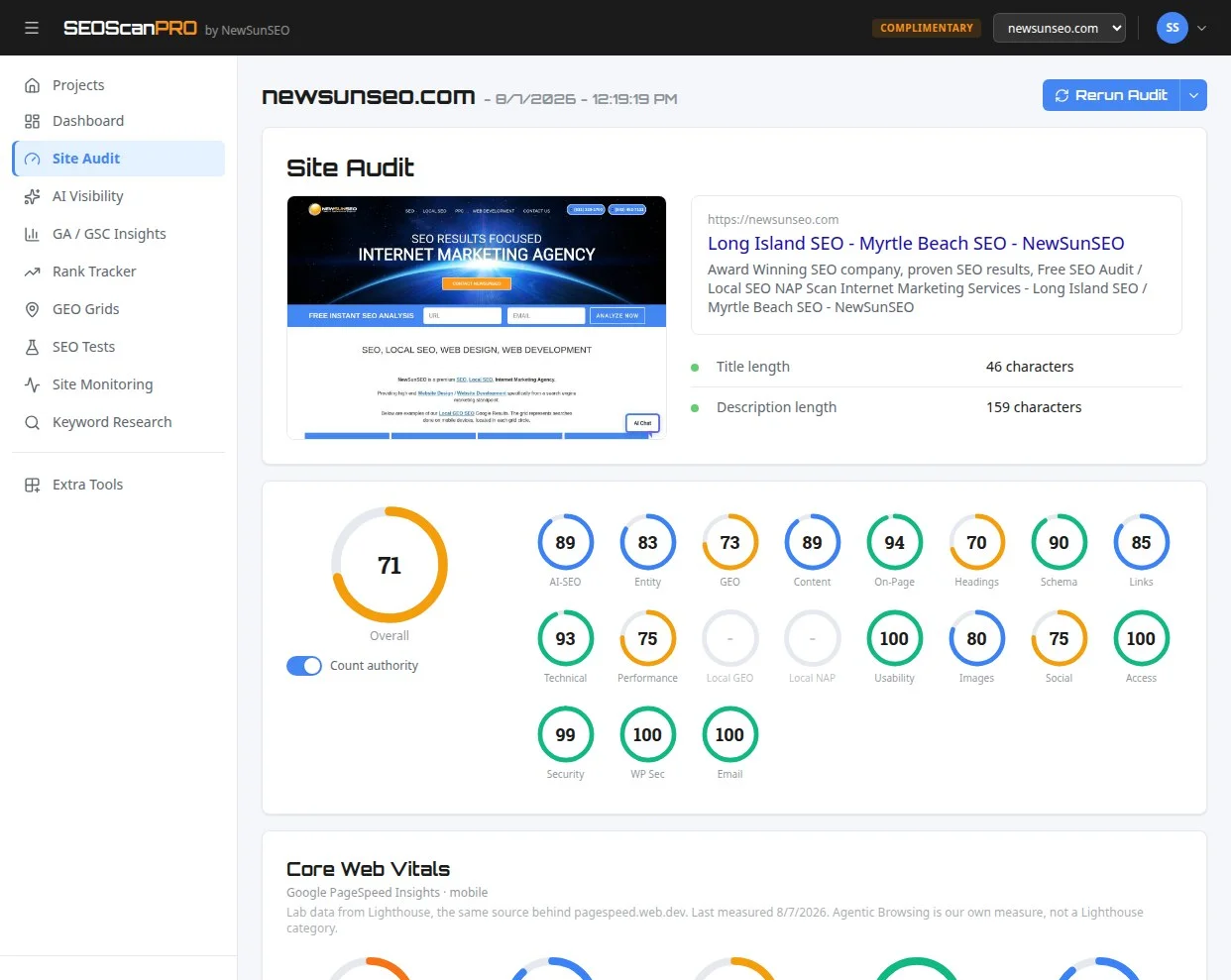
SEOScanPro’s site audit tool runs a full technical audit of a site and shows the measured result behind every check. Open the site audit tool.