Google Tests Human Check Before Serving Search Pages

Google is testing a short human verification step before serving search results. After a brief countdown, a Continue button activates and the user proceeds to the results page, a passive check designed to slow automated scraping without requiring a sign-in.
The test builds on earlier verification experiments Google has run in August 2026, including a version that asked searchers to sign in to prove they were human. This new approach skips the sign-in and instead relies on a timed gate that turns a disabled button into a clickable one once Google decides the request looks human. It is the latest in a wider set of anti-scraping measures Google has been layering into search.
What the test looks like
In the variant now being observed, a searcher reaches a page with a blue Continue button. For the first few seconds the button is grayed out and unclickable. Once the delay passes, the button turns blue and becomes active. The screenshot shared on X showed the button visibly disabled at first, then enabled, signaling that the verification had completed on Google’s side.
This differs from the earlier August test, which asked users to sign in to a Google account before they could continue. Removing the sign-in requirement lowers the friction for real people while still adding a hurdle for bots that fire requests without rendering JavaScript, waiting, or simulating a click.
Why Google is doing this
Search results pages are a frequent target for large-scale scraping. Automated systems pull result data to feed other products, train models, or build proxy search engines that bypass advertising and direct traffic away from Google. By inserting a client-side delay that requires browser execution and a human-like interaction, Google raises the cost of scraping at the source.
The test is part of a broader push that has included the new goto redirects, sign-in prompts, and the older CAPTCHA flow. Each method targets a different scraping pattern, from headless HTTP clients to full browser automation, and Google appears willing to rotate between them rather than commit to a single gate.
Where it is being tested
The Continue button has been seen in English and in other languages. A French-language observation described the gate appearing in a private browsing window, which suggests the test is not tied to a single locale or account type. Spotting it across languages and modes indicates a broader rollout than a narrow experiment.
What it means for searchers and site owners
For everyday users, the change should feel minor: a short wait and one extra click before results appear. For site owners and SEO tools that fetch Google results at scale, the new check is another reminder that scraping Google’s results page is not a stable foundation. Tools that rely on official APIs, or that work with structured data and direct integrations, sidestep these gates altogether.
For anyone tracking how a site appears across locations, rank position across a service area is what a geo grid report shows, and SEOScanPro’s GEO Grids do this.
How the verification fits with Google’s other anti-scraping work
The Continue button joins a small toolkit Google has been testing in 2026. The sign-in prompt adds identity. The goto redirects obscure result URLs from simple scrapers. CAPTCHAs add puzzle-solving. A timed Continue button adds a behavioral signal: a request that waits, renders, and clicks. Combined, they make casual scraping much harder and push serious operators toward Google’s published APIs, where usage terms are clear and traffic can be monitored.
FAQ
What is Google’s new Continue button test?
It is a verification step that appears before search results load. A Continue button starts grayed out and becomes clickable after a short delay, once Google decides the request looks human. No sign-in is required.
How is this different from the sign-in verification Google tested earlier?
The earlier test asked searchers to sign in to a Google account to prove they were human. The new test skips sign-in and relies on a timed button, which is quicker for real users but still blocks bots that do not render JavaScript or simulate a click.
Why is Google adding these human checks?
To deter automated scraping of search results. Bots that pull Google’s pages at scale undercut advertising and feed competing services. By layering sign-in prompts, redirects, CAPTCHAs, and now a timed Continue button, Google raises the cost of scraping and pushes serious users toward official APIs.
Related coverage
- Weekly Search News Recap: AI Local Results Slop, Google AI Home Page Buttons, and Meta Building a Search Engine – LocalSEOBot
- Google Search Console Links Report Not Updated In A Month – LocalSEOBot
- Inside Google Maps: 72 Ranking Signals and the Architecture Behind Local Search – LocalSEOBot
SEOScanPro
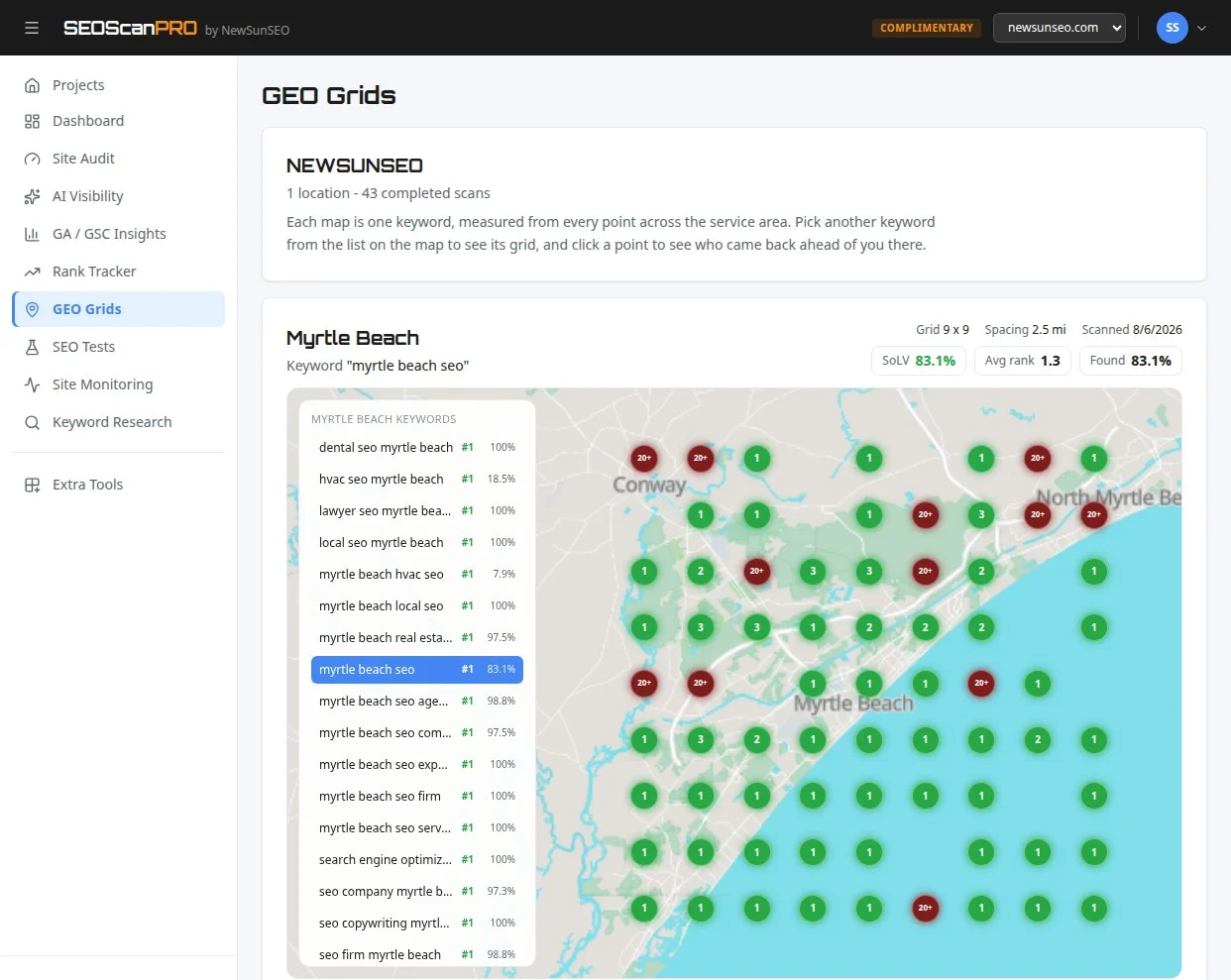
SEOScanPro’s geo grid tool runs a full technical audit of a site and shows the measured result behind every check. Open the geo grid tool.