Google Page Experience Docs Add CrUX Ad Metrics for Site Evaluation

Website owners now have a clearer way to evaluate how ads affect the real experience of visitors. Google updated its Understanding page experience in Google Search results help document to include experimental Chrome User Experience Report (CrUX) ad metrics, which measure ad count, ad density, and ad weight as reported by Chrome. The addition gives publishers and SEO teams a shared measuring stick for discussing ad load without guessing.
What the CrUX Ad Metrics Measure
The new line appears in the Page experience resources section of the document. It points to experimental CrUX metrics from Chrome that help a site understand its ad count, ad density, and ad weight. Each metric breaks down a different part of the user experience:
- Ad Count: The average number of ads in the viewport.
- Ad Density: The average fraction of the viewport area occupied by ads.
- Ad Weight (Network Usage): The resources consumed by ads, measured in bytes.
- Ad Weight (CPU Usage): The resources consumed by ads, measured in milliseconds.
These four measurements together paint a picture of how much of a visitor’s screen, bandwidth, and processing power goes toward advertising rather than content. A site with a high ad density and heavy network or CPU usage gives visitors a very different experience than one with a single lightweight ad unit.
Are the CrUX Ad Metrics a Ranking Signal?
Google has not said these ad metrics are a specific ranking signal for search. They were added as available metrics to help evaluate the state of a site. The documentation update is not a confirmation that ad count or ad weight directly changes where a page ranks.
The distinction matters because page experience has a long history of mixed messaging. Google has made many qualified statements about the importance of page experience and Core Web Vitals. At one point the company said it did not confirm any of these things as a direct ranking factor, then later confirmed Core Web Vitals as a ranking factor. Google has since described page experience as a ranking signal but not a ranking system, and even removed the page experience report from Search Console.
Viewed alongside that history, the update functions as an evaluation aid rather than a new search ranking lever.
How Site Owners Can Use the CrUX Ad Metrics
Publishers who run display advertising can compare their ad count and ad density against their own goals for reader experience. A high ad weight in bytes points to heavy creative files or too many third-party requests, while a high CPU figure points to scripts that slow down the page for visitors. Both are fixable without removing all advertising revenue.
Because the metrics come from Chrome’s real-user reporting, they reflect what actual visitors encounter rather than what a lab test simulates. That makes them useful for prioritising cleanup work: a site that sees high CPU ad weight in CrUX has evidence that ads are taxing user devices, and can test lighter formats or fewer simultaneous units.
SEO tools that run full technical audits and show the measured result for each check help a team connect ad-related slowdowns to other page experience factors already in play.
Why the Wording Around Page Experience Keeps Shifting
The update arrives amid ongoing confusion about how much page experience matters for Google Search rankings. A year or so ago, changes to the helpful content guidance and page experience documentation created the same kind of uncertainty. Google later clarified that these were not ranking systems but signals used by other systems.
The CrUX ad metrics fit that pattern. They are not presented as a ranking system, and Google has not tied them to search position. They are metrics, available to anyone, that make ad experience easier to discuss and work on whether or not SEO is the goal. That keeps the focus on improving the website itself rather than chasing a claimed ranking boost.
FAQ
What are CrUX ad metrics?
CrUX ad metrics are experimental Chrome User Experience Report measurements that show a site’s ad count, ad density, and ad weight. They provide insight into real users’ ad experiences as seen and reported by Chrome.
Are CrUX ad metrics a Google ranking factor?
Google has not said the CrUX ad metrics are a specific ranking signal for search. They were added to the page experience documentation as metrics to help evaluate the state of a site.
What does each CrUX ad metric measure?
Ad count measures the average number of ads in the viewport, ad density measures the average fraction of viewport area occupied by ads, ad weight for network usage measures resources consumed in bytes, and ad weight for CPU usage measures resources consumed in milliseconds.
Related coverage
SEOScanPro
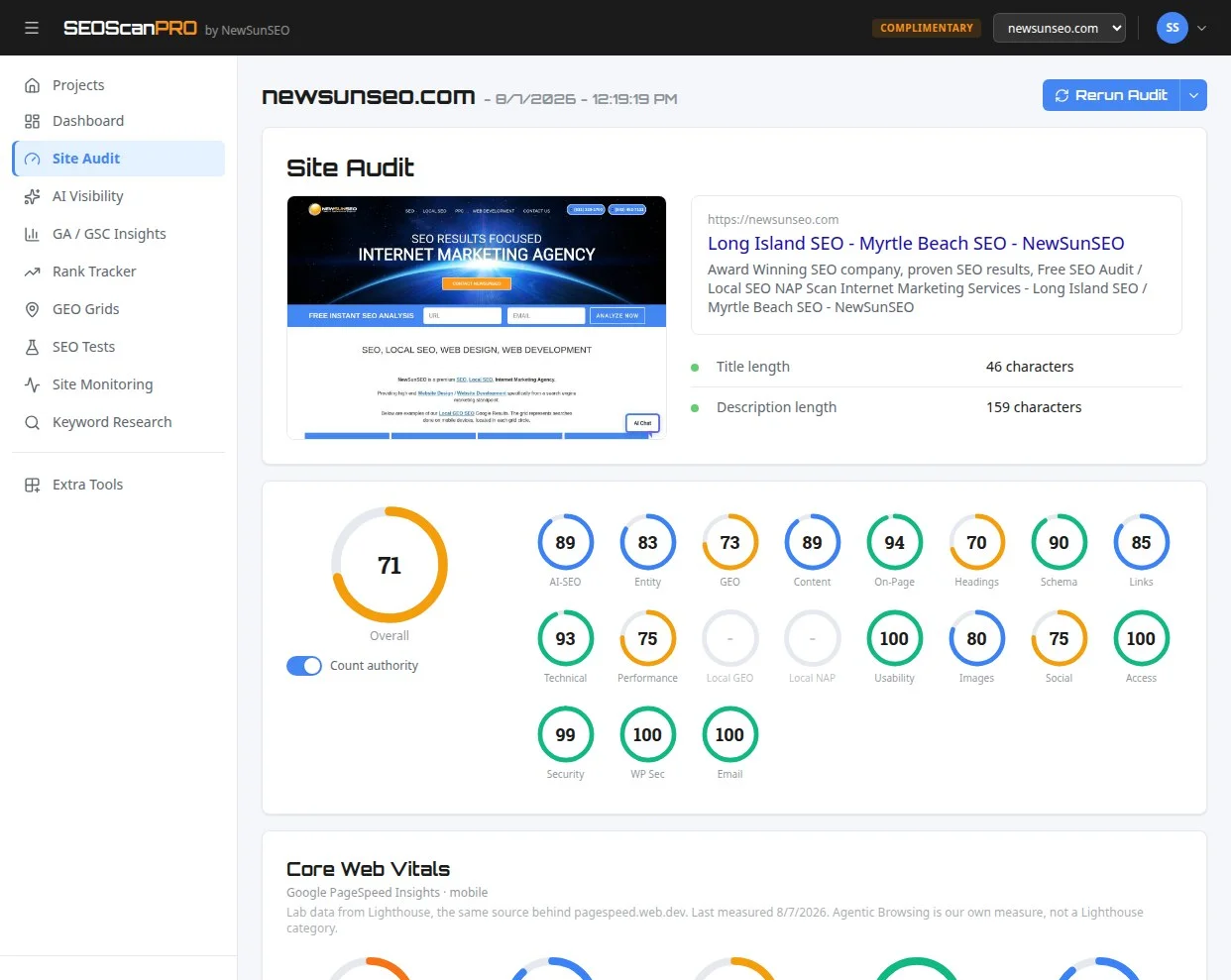
SEOScanPro’s site audit tool runs a full technical audit of a site and shows the measured result behind every check. Open the site audit tool.