Google attributes EU search quality drop to Digital Markets Act changes

Search result changes Google made to comply with the European Union’s Digital Markets Act produced the largest decline in search quality the company has measured in its own ranking systems. The findings come from Google’s own assessment of how its EU search results performed after the regulatory changes went into effect.
What Google measured
Google compared the quality of search results served inside the EU, where the Digital Markets Act requires specific changes to how Google ranks and presents results, against search results in other regions where those requirements do not apply. The company reported that the gap in measured quality between the two groups was the largest degradation Google has recorded for its search ranking systems.
Why the Digital Markets Act changes the results
The Digital Markets Act designates large platforms as gatekeepers and imposes obligations on how those platforms can treat their own services relative to third-party offerings. For Google Search in the EU, the regulation affects how some vertical results, such as comparison and shopping units, are displayed alongside standard web results.
Because Google’s standard ranking pipeline is shared globally, adjusting the EU-specific display layer to satisfy DMA requirements has a downstream effect on the quality signals that the underlying ranking system relies on, according to the company.
What Google has said about the impact
Google has framed the measured decline as evidence that regulations forcing changes to ranking and presentation can hurt the relevance of results users see. The company has used the assessment to argue that further regulatory intervention would extend the same pattern to other regions and other parts of the search experience.
The underlying ranking system continues to draw on the same core quality signals, including content quality, relevance, and the site’s measured trustworthiness. The DMA-driven changes affect how some result units are assembled and shown in EU member states, not the broader web index.
What it means for businesses ranking in EU search
For sites that depend on EU search traffic, the practical effect is that the pool of organic web results shown to users in the EU is shaped differently than the pool shown to users elsewhere. Sites that would have appeared in a dedicated comparison or shopping unit in another region may compete in the standard web results instead inside the EU.
Tracking where a site appears across both EU and non-EU search results is the most direct way to see how the DMA-driven presentation changes are affecting visibility for a given query set. Tools such as SEOScanPro’s GEO Grids show rank position across a service area, which makes it easier to spot the regions where a site is visible and the regions where a competitor has taken the slot instead.
What to watch next
The DMA compliance rollout in EU search is still active, and Google has signaled that further changes to how results are presented in the EU are likely as the regulation is implemented and tested. Any business whose customer base sits inside the EU should treat EU search visibility as its own reporting category, separate from global rankings, and review it on a regular cadence rather than relying on a single region-wide average.
FAQ
What is the Digital Markets Act doing to Google Search in the EU?
The Digital Markets Act requires Google to change how some of its own vertical results, including comparison and shopping units, are presented alongside standard web results in EU member states. The changes apply to the display layer of EU search rather than to Google’s core web index.
How large a drop in search quality has Google reported?
Google has described the decline in measured EU search quality, compared with non-EU results, as the largest degradation the company has measured for its ranking systems.
Does the DMA affect Google Search rankings outside the EU?
No. The DMA-driven presentation changes apply to search results shown to users in EU member states. Google’s core ranking pipeline is shared globally, but the display adjustments required by the regulation are scoped to the EU.
Related coverage
- Weekly Search News Recap: AI Local Results Slop, Google AI Home Page Buttons, and Meta Building a Search Engine – LocalSEOBot
- Google Search Console Links Report Not Updated In A Month – LocalSEOBot
- Inside Google Maps: 72 Ranking Signals and the Architecture Behind Local Search – LocalSEOBot
SEOScanPro
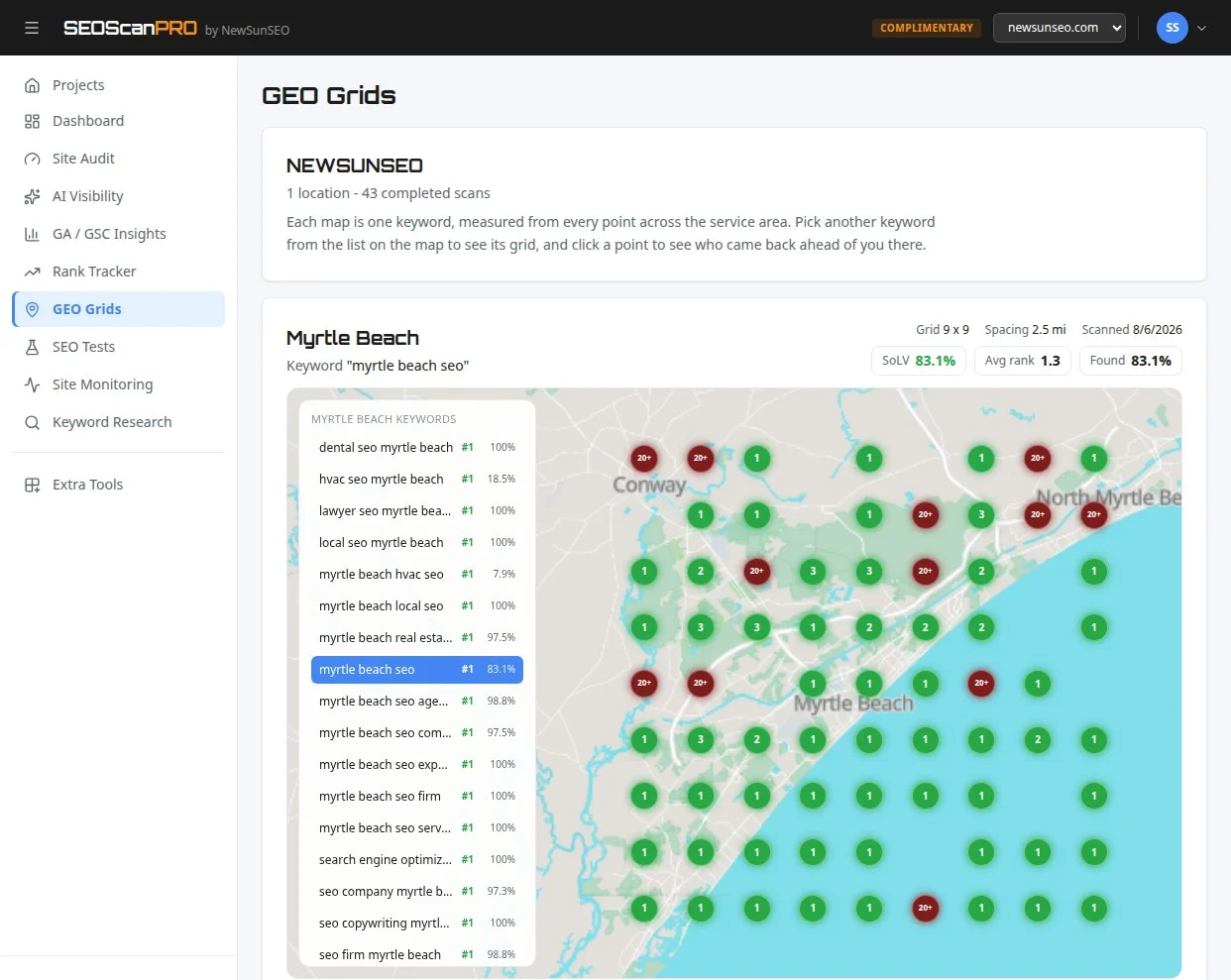
SEOScanPro’s geo grid tool runs a full technical audit of a site and shows the measured result behind every check. Open the geo grid tool.