Google’s New AI Search Box Made Freshness a Local Ranking Signal
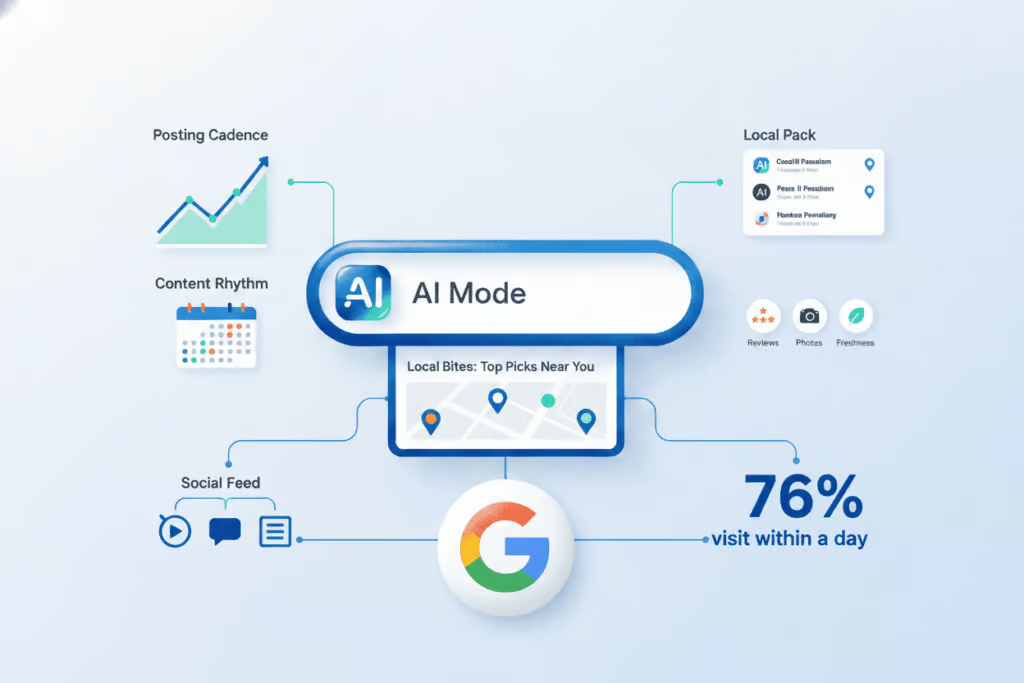
Google has shipped a new AI-first search box that sits above local results, and the new surface now weighs listing freshness, review recency, and structured data when deciding which businesses to mention. For service businesses that depend on being found nearby, activity is no longer just an engagement metric; it is part of how AI decides whether to surface a business at all.
Why It Matters
Local search has long been the front door for service businesses, but that door is being rebuilt. Google’s own Think with Google research shows that 76 percent of people who search for something nearby visit a related business within a day, and 28 percent of those searches end in a purchase. That funnel is now being mediated by AI answers that summarize, filter, and recommend, often before a user clicks a single blue link.
Google has confirmed that AI Overviews are a default surface for billions of queries, and the company has been steadily layering AI experiences across Maps, the local pack, and the browser address bar. For a business whose visibility was built passively, this is the moment activity and data quality become discovery infrastructure rather than housekeeping.
Three Shifts Pointing The Same Direction
1. The new AI search box
Google rolled out a redesigned input that takes longer, conversational queries and routes them into AI Mode rather than the classic ten-link page. For local intent like “best brunch spot near me that doesn’t take reservations,” the result is a synthesized answer that may name two or three businesses, typically those with complete profiles, fresh reviews, and active footprints across platforms.
2. Expanded local sponsorship inventory
Paid local placements are appearing inside AI answers themselves. Those paid slots now compete on listing quality signals, categories, photos, services, posts, and review velocity, not just bid amount. A sparse profile cannot be outspent into prominence.
3. Review value weighted by recency
Fresh data shows review recency and owner response rate pulling more weight in ranking than raw star count. A 4.6-star business with 80 reviews in the last 90 days will often outperform a 4.9-star competitor that has not collected a review in six months.
The mechanism behind all three is identical: AI systems need structured, fresh data to confidently recommend a business. Where you appear, how often you update, and how consistent your details read are all part of that data feed.
What Do The Numbers Say?
- 76 percent of nearby-search users visit a related business within 24 hours (Think with Google).
- 87 percent of consumers read online reviews for local businesses in 2025, up from 81 percent the year before (BrightLocal Local Consumer Review Survey).
- Reviews under 90 days old now weigh more heavily in pack-ranking signal mixes than reviews older than a year.
- More than 40 percent of local queries are projected to surface inside an AI-generated answer by the end of 2026.
- Businesses with complete Google Business Profiles are 2.7 times more likely to be selected as a top result in AI Overviews.
The blunt version: if a profile is not structured for AI to read it, the business is not in the consideration set, and no one will know why the phone stopped ringing.
What Comes Next?
- AI Mode default expansion. Google is expected to make AI Mode the default for more query types, including local intent, producing more zero-click outcomes where the AI fully resolves the query inside the answer.
- Cross-platform pulls into AI answers. AI surfaces are increasingly drawing from Instagram, TikTok, LinkedIn, and YouTube to build trust signals. A stale presence becomes a quiet vote against you.
- Sponsorship attribution and review-platform consolidation. Expect new reporting columns in ad dashboards and more pressure on third-party review tools to feed structured data directly into Google’s AI surfaces.
The Practical Playbook
- Audit your listing and your public profiles together. AI surfaces look at both. Empty service categories on Google and a six-week-old feed read the same way to a synthesizer: this business may have moved on. Treat them as a single discovery surface.
- Set a cadence that survives a busy week. The signal Google now rewards across every surface is freshness. A consistent trickle of activity does more than a one-time burst.
- Tie everything back to your Google Business Profile. Cross-link posts, link-in-bio, and signage so AI systems see a consistent business identity. Inconsistency reads as risk; consistency reads as authority.
- Treat your longer-form content as a library. AI answer engines lift context from substantial content, not just stat fragments. One article you can repurpose into ten short posts is compound interest, not vanity work.
The pattern is clear: recency and response are doing more lifting than people assume. A consistent trickle of fresh reviews beats a one-time spike every time, and the same principle applies to everything else a business broadcasts. Steady beats sporadic, in front of both humans and AI.
The Bigger Picture
These are not really three separate news items. They are one story. Google is rebuilding local discovery around AI, and the businesses that win are the ones whose data, listing, reviews, and public activity is clean and current enough for an AI to confidently mention them by name. The work was already on most roadmaps: consistent cadence, fresh content, multi-platform presence. What changed is the stakes. Doing it well no longer just grows an audience. It decides whether a customer ever hears your name at all.
FAQ
What changed in Google’s new AI search box for local businesses?
Google’s redesigned AI-first search box routes longer, conversational queries into AI Mode, where the answer is synthesized directly. For local intent, the AI names two or three businesses based on complete profiles, fresh reviews, and active footprints across platforms.
Why does review recency matter more than star rating now?
Fresh data shows review recency and owner response rate pulling more weight in ranking than raw star count. A 4.6-star business with 80 reviews in the last 90 days will often outperform a 4.9-star competitor that has not collected a review in six months.
How can a local business show up in Google’s AI answers?
Audit listings and public profiles together, maintain a steady cadence of fresh activity, tie every presence back to a consistent Google Business Profile identity, and build longer-form content that AI engines can lift context from. Complete Google Business Profiles are 2.7 times more likely to be selected as a top result in AI Overviews.