Flock Safety Abandons Audio Surveillance Pilot After Public Backlash and Civil Liberties Concerns
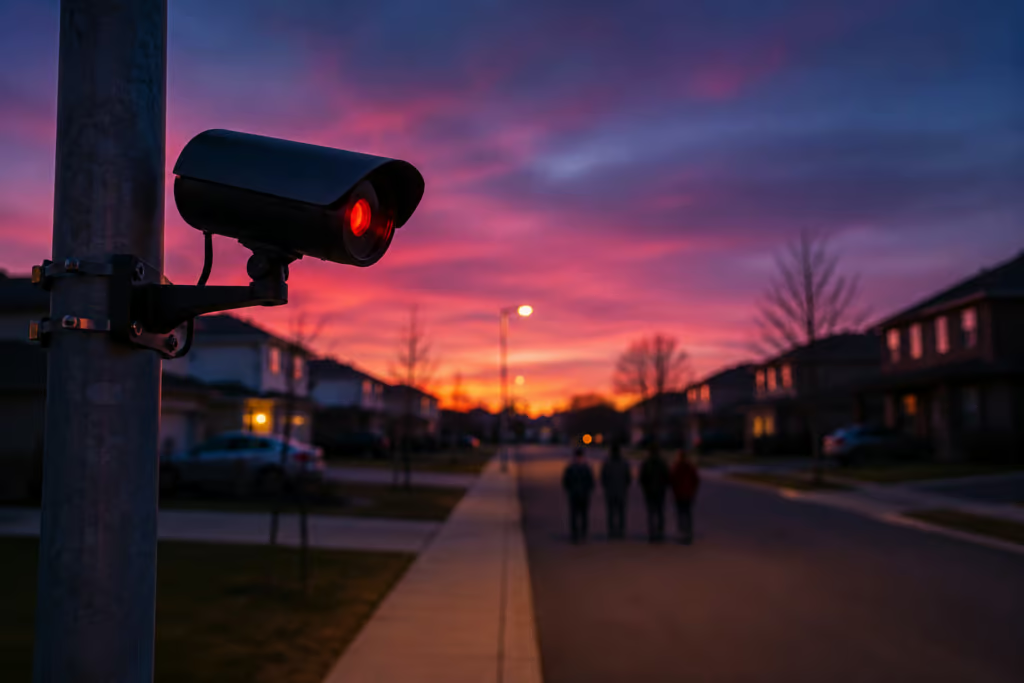
Flock Safety terminated its audio “distress detection” pilot program on July 17, 2026, after sustained public pressure and civil liberties objections led the Electronic Frontier Foundation to confirm the reversal. The pilot used high-powered microphones to monitor public spaces for sounds of “screaming,” a feature critics warned could summon armed officers to routine arguments or children playing outside. Despite the cancellation, Flock continues to operate thousands of audio detection devices installed across U.S. communities.
What Was the Distress Detection Pilot?
Flock Safety, widely known for its automated license plate readers deployed at thousands of intersections, began rolling out acoustic gunshot detection devices originally branded as Flock Raven. In October 2025, the company quietly introduced a “Distress Detection” feature that repurposed these microphones to search for sounds of “human distress.” Original marketing materials specified the search for “screaming,” language the company later softened to the vaguer “distress” after public scrutiny.
The feature alarmed civil liberties groups because it represented significant mission creep. Acoustic gunshot detection technology has drawn criticism for inaccuracy, including incidents in Chicago where police shot at children setting off fireworks. Critics argued that layering vocalized distress detection on top of that infrastructure could result in armed responses to loud arguments, emotional outbursts, or ordinary play in public spaces.
Why Did Flock Cancel the Pilot?
Flock announced the termination on July 17, 2026, citing “careful consideration and community consultation.” The Electronic Frontier Foundation confirmed the decision and framed it as a public pressure win. The EFF noted that the feature would have violated state eavesdropping laws in several jurisdictions and warned that “this was a misguided and dangerous feature because of the civil liberties concerns it poses, the possibility it could summon armed police to every loud interaction happening on the street.”
Flock defended its broader audio product line in a blog post, stating that audio detection “was designed to help identify potential violent incidents in areas where other public safety tools were less effective.” The company also said the feature “was only available to a small number of customers as part of a limited trial, and was never broadly released.”
How Big Is the Remaining Audio Network?
The cancellation covers only the Distress Detection pilot. Flock continues to operate thousands of audio detection devices across the country, monitoring for gunshots, fireworks, and what the company calls “community disruption.” The EFF emphasized that the pilot’s cancellation “does not mean that these high-powered microphones are now magically safe.”
What Has the Public Response Looked Like?
Opposition to Flock’s expansion has become increasingly visible. According to reporting cited in the coverage, the number of individuals hacking down, blinding, or otherwise sabotaging Flock cameras has reached levels described as “countless.” Those who destroy the devices are described as folk heroes within growing online anti-Flock communities, which are also organizing defense campaigns for vandals facing legal consequences.
In Houston, multiple Flock cameras were found cut in half and spray-painted on July 4, 2026, near Washington Avenue, with one camera displaying an American flag painted over its lens. The Houston Police Department confirmed an investigation but could not immediately determine who was responsible or which entity owned the specific cameras, a complexity arising from the fact that Flock cameras can be installed through city contracts, neighborhood associations, or private groups that share footage with law enforcement.
Flock condemned the vandalism, stating that “damaging public safety equipment is illegal and puts the community at risk.” The company claimed overall reports of vandalism remain low, though independent observers dispute that characterization given the widespread reporting of such incidents.
Why Does Mission Creep Matter Here?
The Flock controversy highlights a recurring pattern in which surveillance infrastructure justified for narrow purposes expands into broader monitoring. License plate readers, originally sold as tools for recovering stolen vehicles, are now being augmented with audio monitoring capabilities. The EFF observed that “both the companies and police will leverage deployed surveillance infrastructure to introduce new uses without necessarily seeking the consent or approval of the public.”
Similar debates have unfolded for decades, from congressional investigations into FBI surveillance programs in the 1970s to the revelations of NSA mass data collection by Edward Snowden in 2013. The Flock Distress Detection pilot represents a more recent flashpoint in the same ongoing tension between public safety tools and civil liberties.
What Comes Next for Audio Surveillance?
The EFF concluded that “public pressure can sometimes work to influence both companies and lawmakers that control a city’s purse strings to discontinue or divest from harmful products.” Yet the underlying microphone infrastructure persists, and the acoustic gunshot detection technology that Flock retains remains controversial for documented cases of inaccuracy leading to dangerous police responses.
The cancellation of Distress Detection is a partial victory. It demonstrates that organized public opposition can force well-funded surveillance companies to reverse course on specific products. Whether that pressure extends to the remaining audio network, or whether the retreat marks a tactical concession in a longer campaign, remains an open question.
FAQ
When did Flock Safety cancel the audio distress detection pilot?
Flock Safety announced the termination of its “Distress Detection” pilot on July 17, 2026, with the Electronic Frontier Foundation confirming the decision.
What was the Distress Detection feature supposed to do?
The feature used high-powered microphones in Flock’s audio detection network to monitor public spaces for sounds of human distress, originally specified as “screaming” in marketing materials before the company amended the language.
Does Flock still operate audio surveillance devices?
Yes. Flock continues to operate thousands of audio detection devices across U.S. communities that monitor for gunshots, fireworks, and “community disruption,” even after canceling the Distress Detection pilot.
This article summarizes reporting from naturalnews.com.