Figure AI’s F.03 Humanoid Sorted 249,560 Packages in 200 Straight Hours
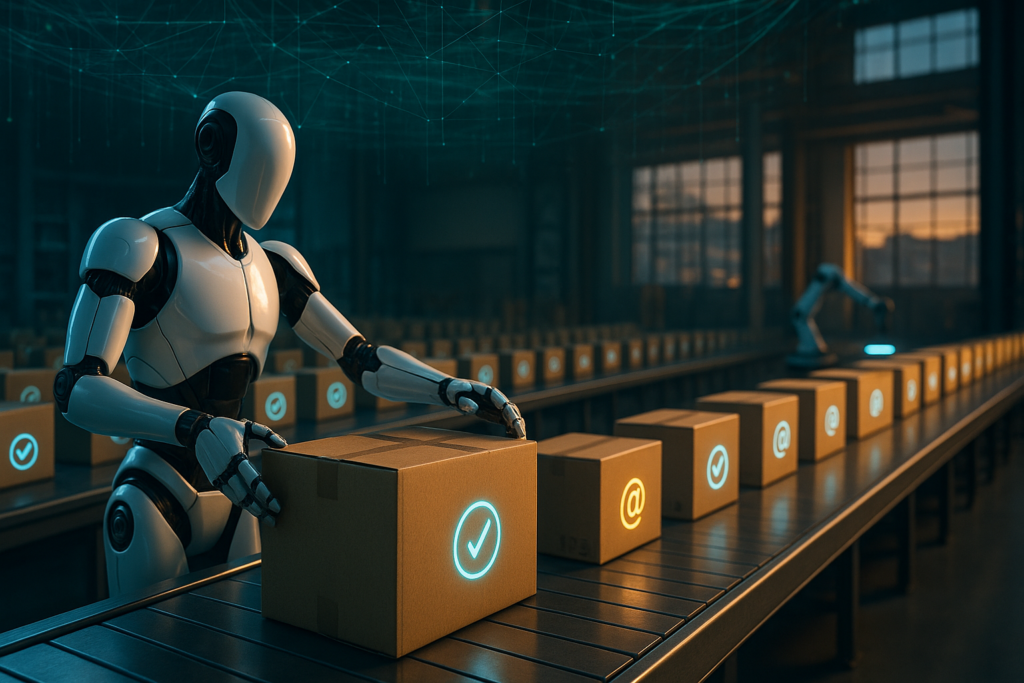
Figure AI ran its F.03 humanoid robot for 200 consecutive hours with no human intervention, no reset, and zero hardware failures. Over eight days at the company’s Sunnyvale facility, the robot sorted 249,560 packages at near-human speed, one every 2.8 seconds, and Figure livestreamed the entire run from May 14 to May 22, 2026. Three robots rotated autonomously, each stepping onto a wireless charging pad while another kept working, and no human touched any of them for the full run.
The significance is not the package count alone. It is the demonstration that the full autonomy loop, perception, decision, action, and retry, can run at production scale without a person in the chain, a different claim from a polished lab demo, and Figure is treating it that way.
Why This Is a Production Claim, Not a Proof of Concept
Figure points to an earlier model that spent 11 months at BMW’s Spartanburg plant, where it loaded more than 90,000 parts and helped produce more than 30,000 vehicles. The framing the company uses is blunt: these are production numbers, not proof-of-concept numbers. A run that survives 200 hours of continuous operation without a failure is evidence of reliability, not just capability.
The commercial signals point the same way. Industrial supplier Schaeffler has signed a deal targeting 1,000 to 2,000 humanoid robots by 2032. Figure is targeting late 2026 for limited home deployments at a unit price around 20,000 dollars. The company is backed by Microsoft, Nvidia, Amazon, Jeff Bezos, and OpenAI, an investor list that ties the hardware directly to the largest AI platform builders.
What Did the Numbers Look Like?
- 249,560 packages sorted in 200 consecutive hours.
- 2.8 seconds per package, near-human speed.
- 8 days of zero human intervention and zero hardware failures.
- 90,000+ parts loaded across 11 months at BMW Spartanburg.
- 30,000+ vehicles produced with humanoid assistance.
- 41,000 commercial robots deployed in warehousing in 2026, per International Federation of Robotics tracking.
- 340+ quick-service restaurant locations running at least one robot, a 61% year-over-year increase.
- 1,000 to 2,000 humanoid robots targeted by Schaeffler by 2032.
- 20,000 dollars target unit price for late-2026 home deployments.
What separates this run from prior humanoid demonstrations is duration under load. Most robotics showcases run for minutes and are stopped before anything can drift or fail. Sustaining a single repetitive task across 200 hours stresses the parts that usually break first: thermal management, battery and charging cycles, joint wear, and the error-recovery logic that has to catch a misgrip without a technician standing by. Doing it across three units that hand off autonomously also tests coordination, not just individual reliability. Those are the failure modes that matter when a buyer is deciding whether a fleet can run an overnight shift unattended, and they are exactly what an eight-day run is designed to expose.
Where Do Humanoids Go From Here?
Logistics and fulfillment are already the largest vertical for commercial robots, and food service, particularly customer-facing roles in quick-service restaurants, is the fastest-growing category. Hospitals and elder-care facilities are evaluating humanoids for supply transport and sanitation. Figure’s stated path moves from warehouse pilots toward limited home deployments by late 2026, which would put a general-purpose humanoid in a consumer setting for the first time at meaningful scale.
The cost target is the variable that decides how fast this spreads. At roughly 20,000 dollars per unit, a humanoid sits in the range of a piece of capital equipment rather than a research curiosity. Whether Figure can hit that price at volume, and whether reliability holds outside a controlled facility, are the open questions the next phase will answer.
Why Does This Matter Beyond One Robot?
The same AI loop that ran the warehouse test, perception feeding decision feeding action, is the loop underpinning a wide range of autonomous systems, not just robots that move boxes. A demonstration that the loop is stable, scalable, and failure-resistant over 200 hours is a data point about autonomous AI in general, which is why the investor list behind Figure reads like a roster of the companies building the broader AI stack.
For organizations watching the space, the practical signal is that humanoid automation is moving out of the demo phase and into procurement conversations. A robot that runs eight days without a failure is no longer an experiment a buyer waves off. It is a line item a logistics or manufacturing operation can model, and the next 18 months will show whether the unit economics hold up outside a livestreamed showcase.
FAQ
How many packages did Figure AI’s F.03 humanoid sort during the 200-hour test?
The F.03 sorted 249,560 packages over 200 consecutive hours at near-human speed, averaging one package every 2.8 seconds, with three robots rotating autonomously on wireless charging pads from May 14 to May 22, 2026.
Is Figure AI already deploying humanoids in real production environments?
Yes. An earlier Figure model spent 11 months at BMW’s Spartanburg plant, loading more than 90,000 parts and contributing to production of more than 30,000 vehicles. Industrial supplier Schaeffler has also signed a deal targeting 1,000 to 2,000 humanoid robots by 2032.
What is Figure AI’s target price and timeline for home humanoids?
Figure is targeting limited home deployments by late 2026 at a unit price of around 20,000 dollars, positioning the humanoid in the range of capital equipment rather than a research curiosity.